

Last updated: July 2026
Colorado has no shortage of rivers—or outfitters eager to call their stretch of whitewater the best in the state.
The honest answer is more useful: Colorado’s best rafting river depends on who is in your group, when you are visiting and what you want the experience to feel like.
Some rivers are perfect for a family’s first rafting trip. Others provide nearly continuous technical whitewater. A few require exceptional fitness, favorable water levels and a realistic understanding of the consequences. Colorado offers everything from quick trips through mountain towns to multi-day expeditions where roads and cell service disappear for days.
We have run the San Juan River in Pagosa Springs for more than 20 years, but we have spent enough time around Colorado whitewater to know that no river is right for everyone. This is our candid guide to what the state’s major rafting sections are actually like, who each one suits and which local outfitters we trust when we are not the ones taking you.

Colorado Whitewater Rafting at a Glance
Colorado’s commercially rafted rivers range from relaxed family floats to remote Class V expeditions. Here is the quickest way to compare the state’s major rafting regions and river sections.
Southwest Colorado
- San Juan River in Pagosa Springs — Best for: Uncrowded whitewater, hidden canyons and three distinctly different adventures. Typical difficulty: Class II–III+
- Piedra River — Best for: A rare chance to raft commercially restricted Southwest Colorado canyon whitewater. Typical difficulty: Class II–IV
- Lower Animas — Best for: Family-friendly rafting through downtown Durango. Typical difficulty: Class II–III
- Upper Animas — Best for: A remote, narrow-gauge-train-supported alpine expedition. Typical difficulty: Class IV–V
- Dolores River — Best for: Rare multi-day rafting through red-rock canyon country. Typical difficulty: Class II–IV
- San Miguel River — Best for: Continuous intermediate whitewater near Telluride. Typical difficulty: Class II–III
Arkansas River
- Pine Creek and the Numbers — Best for: Athletic paddlers seeking technical, sustained whitewater. Typical difficulty: Class IV–V
- Browns Canyon — Best for: Classic Colorado scenery and intermediate excitement. Typical difficulty: Class III
- Bighorn Sheep Canyon — Best for: Families, first-time rafters and mixed-experience groups. Typical difficulty: Class II–III
- Royal Gorge — Best for: Bigger rapids beneath towering granite walls and the Royal Gorge Bridge. Typical difficulty: Class III–IV
Front Range and Northern Colorado
- Clear Creek — Best for: Fast, technical whitewater close to Denver. Typical difficulty: Class II–IV+
- Cache la Poudre — Best for: Wild and Scenic mountain rafting near Fort Collins. Typical difficulty: Class II–IV
- Northgate Canyon — Best for: Remote whitewater, wildlife, fishing and wilderness camping. Typical difficulty: Class III–IV
Colorado River and Its Mountain Tributaries
- Blue River — Best for: A short, scenic family trip near Breckenridge and Summit County. Typical difficulty: Class II–III
- Eagle River — Best for: Seasonal whitewater near Vail and Beaver Creek. Typical difficulty: Class II–IV
- Upper Colorado River — Best for: Families, younger children and relaxed summer floating. Typical difficulty: Class I–III
- Gore Canyon — Best for: Expert paddlers pursuing one of America’s hardest commercial rafting trips. Typical difficulty: Class IV–V
- Shoshone and Glenwood Canyon — Best for: Accessible Colorado River whitewater near Glenwood Springs. Typical difficulty: Class II–III
- Ruby–Horsethief Canyon — Best for: A first overnight river trip through red-rock canyon country. Typical difficulty: Class I–II
- Roaring Fork River — Best for: Aspen-area scenery and seasonal mountain whitewater. Typical difficulty: Class II–IV
Gunnison River Drainage
- Taylor River — Best for: Cold, clear mountain whitewater near Crested Butte. Typical difficulty: Class II–III
- Upper Gunnison River — Best for: Family rafting, scenic floating and fishing. Typical difficulty: Class I–II
- Gunnison Gorge — Best for: A pack-supported wilderness expedition combining technical whitewater and exceptional trout fishing. Typical difficulty: Class III–IV
- Lower Gunnison Gorge — Best for: Family rafting, desert-canyon scenery and the option to explore by raft, SUP or inflatable kayak. Typical difficulty: Class I–II
- North Fork of the Gunnison — Best for: A scenic spring whitewater trip through one of Western Colorado’s lesser-known river canyons. Typical difficulty: Class II–III
Rio Grande Drainage
-
Upper Rio Grande — Best for: Uncrowded family rafting near South Fork and Creede. Typical difficulty: Class II–III
Northwest Colorado and Canyon Country
- Yampa River — Best for: A free-flowing multi-day wilderness expedition through Dinosaur National Monument. Typical difficulty: Class II–IV
- Green River Canyons — Best for: Desert scenery, remote camps and multi-day river travel. Typical difficulty: Varies by section
- Westwater Canyon — Best for: Concentrated desert whitewater near the Colorado–Utah border. Typical difficulty: Class III–IV
Northern New Mexico Bonus
-
Rio Chama — Best for: An approachable desert-canyon overnight within easy reach of southern Colorado. Typical difficulty: Class II–III
Southwest Colorado: The San Juan, Animas, Piedra, Dolores and San Miguel Rivers
The San Juan River in Pagosa Springs
Best for: Uncrowded whitewater, hidden canyons, exclusive river access and groups that want a more personal Colorado rafting experience

The upper San Juan delivers far more variety than most visitors expect from a small mountain town. In one compact river corridor, paddlers can run splashy rapids through downtown Pagosa Springs, travel 13 miles through a secluded canyon or tackle tight, boulder-filled Class III+ whitewater on an exclusively accessed mountain fork.
The setting changes constantly. The river moves beneath cottonwoods and sandstone cliffs, through wave trains and rocky bends, and directly into the Pagosa Springs whitewater park. Depending on the trip, the experience can be a fast introduction to whitewater, a scenic half-day journey or Pagosa’s premier technical run.
The other distinction is space. The upper San Juan remains a true best-kept secret. That protects the feeling that you are exploring the river rather than joining a raft parade. We rarely encounter boats that are not part of our own trips.
Splash & Dash: Streamlined Quarter-Day Whitewater
Short on time and big on fun, the Splash & Dash condenses the best of Pagosa’s downtown whitewater into an easy-to-fit river adventure.

A scenic opening float builds toward six splashy rapids in the Pagosa Springs whitewater park. At medium and higher flows, the waves are fully capable of soaking the entire boat and producing the kind of rapid photos families frame instead of quietly forgetting.
With approximately an hour on the water and short shuttles at each end, Splash & Dash delivers a genuine Class II–III rafting experience while leaving plenty of time for hot springs, hiking and exploring Pagosa Springs. It is a fast favorite for first-timers, families and fun-seekers of all ages—not because the trip is tame, but because it packs so much river into a streamlined quarter day.
Mesa Canyon: Pagosa’s Signature River Trip
The Mesa Canyon trip is Pagosa’s signature half-day rafting experience: 13 miles of hidden canyon, cliff-lined bends and scenic, splashy whitewater below town.

Once the river leaves Pagosa Springs, roads and buildings fall away behind sandstone mesas and mature cottonwoods. Playful Class II–III rapids alternate with quieter stretches where there is time to watch for wildlife and enjoy the canyon. Near the end of the run, Llama Falls provides the trip’s biggest and most memorable rapid.
Mesa Canyon has the distance and scenery to feel like a complete river journey. It combines enough whitewater to keep paddlers engaged with enough breathing room to appreciate where the river is taking them. For guests who want more than a quick taste of rafting, this is the trip that best captures the full character of the upper San Juan.
West Fork: Pagosa’s Premier Whitewater Adventure
The West Fork is Pagosa’s premier rafting trip and the most technical whitewater experience on the local river system.
The trip begins with tight, boulder-filled Class III rapids that demand teamwork from the first paddle strokes. Calmer water through the middle provides a chance to reset and take in the mountain views before the river builds toward another splashy finish.

Pagosa Outside is the only outfitter with private access to this section. That exclusive entry, combined with the absence of other commercial traffic, creates an unusually intimate trip through water most Pagosa visitors never get to see.
The West Fork is rugged, technical and wonderfully unscripted. It is designed for adventurous guests who want a premium half-day experience with stronger whitewater, fewer people and a real sense of having discovered something.
All three Pagosa Outside rafting trips include professional guides, premium river gear and complimentary digital photos. What changes is the experience: streamlined downtown fun on Splash & Dash, a complete canyon journey on Mesa Canyon or exclusive technical whitewater on the West Fork. That range is what makes the San Juan one of Colorado’s most underrated rafting destinations.
The Animas River in Durango
Best for: Everything from an easy town run to a remote, train-supported Class V expedition
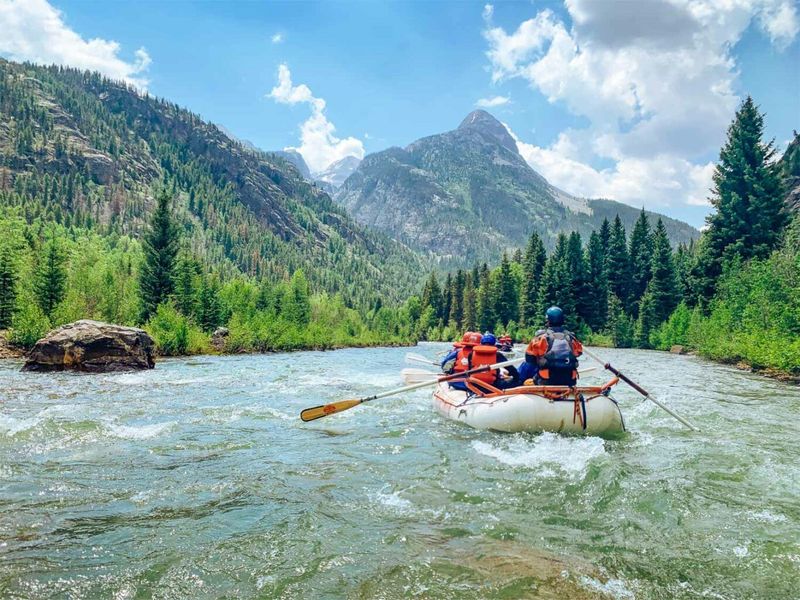
The Animas gives Durango one of Colorado’s broadest ranges of rafting from a single destination.
The Lower Animas flows directly through town with approachable Class II–III whitewater, including the waves around Smelter Rapid. It is lively enough to entertain adults while remaining suitable for many families and first-time paddlers. The bridges, parks and occasional passing train make it feel connected to Durango rather than isolated from it.

The Upper Animas is an entirely different river experience. Above Durango, the Animas drops through the Weminuche Wilderness between peaks rising more than 13,000 feet. Access to portions of the canyon is supported by the historic Durango & Silverton Narrow Gauge Railroad, and trips can combine wilderness camping with continuous Class III and IV whitewater and Class V rapids at higher flows.

There are few pools and few opportunities to relax once the serious whitewater begins. It is one of North America’s most demanding commercially rafted alpine rivers and belongs in the same conversation as Gore Canyon—not in the same category as the Lower Animas town run.
Our Durango recommendation is Mild to Wild, which offers several Lower Animas options along with trips into the Upper Animas for guests who meet the experience, fitness and swimming requirements.
Bonus: The Piedra River
The Piedra’s short runoff season, restricted commercial access and demanding conditions allow only a lucky few to experience one of Colorado’s rarest guided whitewater trips. We recommend Mountain Waters Rafting, a longtime Durango outfitter offering trips through both the Upper and Lower Box canyons when conditions align.
The Dolores River
Best for: A rare multi-day journey through Southwest Colorado’s red-rock canyon country
 The Dolores offers one of Colorado’s most unusual rafting experiences—and one of its least predictable.
Below McPhee Reservoir, the river enters Ponderosa Gorge and then travels through the sandstone landscapes of Slickrock Canyon. Depending on the section, trips combine Class II–III water with larger rapids such as Class IV Snaggletooth.
The Dolores is controlled by releases from McPhee Reservoir, and runnable commercial flows do not occur every year. When snowpack, reservoir levels and release schedules align, the result is a rare opportunity to experience a Colorado river that may remain quiet for several seasons between rafting windows.
Unlike a half-day trip, the Dolores is best understood as a complete desert-river expedition: several days of rafting, camping beneath red-rock walls and traveling through country that is difficult to reach any other way.
Mild to Wild offers guided Dolores River expeditions when runnable releases make trips possible. This is not a river around which to build an inflexible annual itinerary—but when the Dolores runs, river people pay attention.
The San Miguel River
Best for: Telluride visitors seeking continuous intermediate whitewater and a rarely crowded river
The San Miguel begins high above Telluride and runs northwest through forested banks, narrow canyons and red-rock country before joining the Dolores River.
 It is one of Colorado’s few remaining free-flowing rivers, which gives it a lively and natural character. Rather than alternating between long pools and isolated rapids, the San Miguel keeps moving. Its Class II–III whitewater is generally approachable for active first-timers while remaining engaging for experienced paddlers.
The scenery changes quickly with elevation. Upper sections near Telluride feel distinctly alpine, while downstream trips enter warmer sandstone canyons more characteristic of the Colorado Plateau. Depending on water levels and the selected section, the San Miguel can support half-day, full-day and multi-day trips.
The river’s relatively narrow channel and steady current make it feel faster and more intimate than many larger Colorado rivers. It is an excellent choice for visitors staying in Telluride, Ouray or Ridgway who want a classic Southwest Colorado rafting experience beyond the better-known Animas.
We recommend Mild to Wild, which offers San Miguel trips during its snowmelt-driven rafting season.
The Arkansas River: Colorado’s Whitewater Highway
The Arkansas River is Colorado’s busiest commercial rafting river, but that description can obscure how varied it is. Upstream sections near Buena Vista descend steeply through technical boulder gardens. Browns Canyon offers the classic Colorado combination of scenery and Class III whitewater. Farther downstream, Bighorn Sheep Canyon provides a more approachable run before the river enters the confined granite walls of the Royal Gorge.

“Rafting the Arkansas” can therefore mean very different things.
Pine Creek and the Numbers
Best for: Fit, aggressive paddlers seeking technical and sustained whitewater
Pine Creek is one of Colorado’s benchmark advanced runs. The river narrows, accelerates and drops through a Class V section where precise lines and an effective paddle crew matter.

Immediately downstream, the Numbers delivers a closely spaced series of technical rapids named by early boaters with more practicality than imagination. At many flows, the Numbers sits in the Class IV range. Combining it with Pine Creek creates one of the state’s most demanding commercial day trips.
This is cold, fast mountain water with little time for sightseeing. It is spectacular for the right group and a poor place to exaggerate your abilities.
For Pine Creek and the Numbers, we recommend AVA Rafting & Zipline and its Gauntlet trip, which combines both advanced sections into one demanding day.
Browns Canyon
Best for: Classic Colorado scenery, intermediate excitement and groups with mixed rafting experience
 Browns Canyon National Monument is the section many people imagine when they picture rafting in Colorado. The river passes through a granite canyon beneath the Collegiate Peaks with familiar Class III rapids such as Zoom Flume, Big Drop and Widowmaker.
Calm stretches between rapids provide time to look around, recover and enjoy being in the canyon. Browns is exciting without being extreme and scenic without requiring an overnight commitment. That balance makes it one of the state’s most consistently satisfying choices for first-time rafters who want more than a gentle introduction.
We recommend Independent Whitewater, a longtime local operator known for relatively small trips. Its private riverside base allows extended trips to continue beyond common takeouts and finish at the Drift In, a float-up and drive-in bar and grill overlooking the Arkansas.
Ending a rafting trip at a riverside patio instead of a gravel parking lot is a small luxury that becomes surprisingly important once you have experienced it.
Bonus: for a gentler Arkansas River experience: If Browns Canyon sounds like more whitewater than your group wants, the Cottonwood Canyon Family Float with Arkansas River Tours provides an easier introduction downstream near Cotopaxi. Quarter-day and half-day options travel through mountain and canyon scenery with calm water, small riffles and mild rapids. It is particularly well suited to families with young children, seniors and multigenerational groups that want to experience the Arkansas without committing to a more active Class III trip.
Bighorn Sheep Canyon
Best for: Families, first-time paddlers and groups seeking moderate whitewater
Downstream from Browns Canyon, the Arkansas enters a warmer and more open landscape near Cañon City. Bighorn Sheep Canyon combines Class II–III rapids with desert-colored rock, railroad history and the possibility of seeing the animals for which the canyon is named.
The rapids generally have more room and recovery time than those in the Royal Gorge, making this the better downstream choice for families and mixed-confidence groups. The experience is playful rather than intimidating, but it still feels like a genuine river trip rather than a passive float.
For Bighorn Sheep Canyon, we recommend Echo Canyon River Expeditions. Their onsite 8 Mile Bar & Grill is also a convenient place for post-river food and drinks without leaving the rafting base.
The Royal Gorge
Best for: Bigger rapids in one of Colorado’s most dramatic canyon settings
The Royal Gorge begins where the Arkansas enters a narrow granite corridor beneath the famous Royal Gorge Bridge. From the river, the bridge appears almost impossibly high overhead.
The canyon walls limit both the view and the escape routes, giving the run a more serious atmosphere than nearby Bighorn Sheep Canyon. Rapids including Sunshine Falls, Sledgehammer and Wallslammer create Class III–IV whitewater that becomes substantially more demanding at high flows.
 The scenery is extraordinary, but this is not primarily a sightseeing trip. Guests should arrive prepared to paddle.
We recommend Royal Gorge Rafting for its unique safety-kayak/photo program on Royal Gorge along with its popular mountaintop zipline packages.
Bonus: for Colorado’s youngest rafters: The Family Float with Raft Masters opens the Arkansas River experience to families whose children may be too young for Bighorn Sheep Canyon. Raft Masters recommends the trip for families with children ages one to four. The half-day outing includes approximately five miles of gentle floating and splashy fun, with about an hour on the water. Lunch, rafting gear and a trip photo are included, making it an unusually accessible first river experience for the smallest adventurers.
Front Range and North-Central Colorado Rivers
Clear Creek
Best for: Technical whitewater near Denver and short trips that do not feel watered down
Clear Creek’s location makes it easy to underestimate. Idaho Springs can be less than an hour from Denver, but the creek delivers tight, fast and surprisingly technical mountain whitewater.
Beginner sections introduce paddlers to Class II–III rapids. Intermediate runs become more continuous, and advanced sections add Class IV drops, narrow lines and quick decisions. Because Clear Creek carries less water through a tighter channel than many larger Colorado rivers, features arrive rapidly and precise boat placement matters.
It is one of the best answers for travelers who want legitimate whitewater without crossing the Continental Divide or turning a rafting trip into an all-day drive from Denver.
For Clear Creek, we recommend Clear Creek Rafting Company. Founder John Rice helped pioneer commercial rafting on Clear Creek in the early 1990s, giving the company more than three decades of experience on this fast, technical water.
Cache la Poudre River
Best for: A natural mountain-canyon experience near Fort Collins
The Cache la Poudre is Colorado’s only nationally designated Wild and Scenic River. It drops from Rocky Mountain National Park through a forested canyon west of Fort Collins.
Easier sections provide splashy Class II–III water, while more advanced runs add steeper Class III–IV rapids and a more continuous pace. The Poudre feels less developed than many rafting corridors. Highway 14 follows the river through portions of the canyon, but there are no large resort towns or interstate traffic competing with the scenery.
The clear water, granite formations and ponderosa-covered slopes give it a distinctly northern Colorado character.

We recommend Rocky Mountain Adventures, which has been part of the Fort Collins river community since 1993.
One of the best pieces of Poudre rafting history belongs to RMA’s Pigeon Express. Before digital uploads became simple, trained homing pigeons carried 35mm film—and later memory cards—in tiny Lycra backpacks from the canyon back to Fort Collins. They could cover the 20- to 40-mile trip in about 20 minutes and routinely beat the buses back to town.
Not every advancement in rafting involved better boats.
Northgate Canyon on the North Platte River
Best for: Remote wilderness whitewater, wildlife and an overnight trip that few Colorado visitors know exists
The North Platte begins near Walden before entering Northgate Canyon along the Colorado–Wyoming border. Here, the river cuts through an abrupt wall of ancient rock and drops approximately 470 feet over 18 miles.
That gradient produces lively Class III–IV rapids with names such as Stovepipe, Cowpie and Tootsie Roll. Between the whitewater, the river passes through a remote landscape known for moose, bald eagles, river otters and excellent trout fishing.
Northgate feels more isolated than its location might suggest. There are no resort towns lining the canyon and considerably less commercial traffic than on the Arkansas or Clear Creek. The river can be experienced as a full-day trip, but an overnight adds enough time to fish, camp and appreciate how quiet northern Colorado can become.
The North Platte is accessible from Fort Collins, Steamboat Springs and Laramie, making it a compelling alternative for travelers willing to trade convenience for solitude.
For a full-day Northgate Canyon trip, we recommend Rocky Mountain Adventures. For a two-day version with riverside camping, Wilderness Aware Rafting is the stronger fit.
The Colorado River and Its Mountain Tributaries
“The Colorado River” can describe a short family trip near Breckenridge, seasonal whitewater near Vail, a mellow float through open ranch country, splashy rapids in Glenwood Canyon, an expert descent of Gore Canyon or a week-long expedition through the desert.
Those experiences share a drainage, but little else.
The Blue River
Best for: A quick, scenic family trip near Breckenridge, Frisco and Silverthorne
The Blue River flows north from the Continental Divide, passes through Breckenridge and Dillon Reservoir and continues toward its confluence with the Colorado near Kremmling. Commercial trips generally begin below Dillon Reservoir near Silverthorne.
The run starts gently before entering a narrower section with splashy Class II–III rapids framed by the Gore and Tenmile ranges.
The Blue is often described as a “quick hitter,” which is accurate in the best sense. It provides a compact mountain rafting experience without consuming an entire vacation day, making it especially convenient for families staying in Summit County. Its rafting season depends on releases from Dillon Reservoir, so availability can change from one year—or week—to the next.
We recommend KODI Rafting, which offers short Blue River trips when release levels support commercial rafting.
As a hidden-gem bonus, KODI is also the only outfitter running nearby Tenmile Creek—a short, steep Class IV trip available only during its early-summer snowmelt window.
The Eagle River
Best for: Seasonal whitewater close to Vail and Beaver Creek
The Eagle is a free-flowing tributary of the Colorado River powered directly by snowmelt from the Gore Range and surrounding mountains. That natural runoff creates a short but rewarding early-summer season.
The Lower Eagle combines Class II–III rapids with cottonwood-lined canyon scenery, while the Upper Eagle delivers faster and more continuous Class IV whitewater for stronger paddlers.
The Eagle’s greatest advantage is its location. Visitors staying in Vail, Avon or Beaver Creek can experience genuine mountain whitewater without driving to the Arkansas or Upper Colorado. Its greatest limitation is the same quality that gives it character: without a large upstream dam controlling releases, the rafting window rises and falls with the snowpack.
For the Eagle, we recommend Timberline Tours, a longtime Vail Valley operator with what is likely the most experienced group of guides in the state.
The Upper Colorado River
Best for: Families, younger children and people who prefer scenery and swimming to constant whitewater
Between Pumphouse and State Bridge, the Upper Colorado winds through a broad canyon of sagebrush hills, cottonwood bottoms and layered rock. Most trips combine calm floating with Class I–II water and occasional Class III features at higher flows.
Warm springs near Radium, riverside camping and opportunities to swim give the section the relaxed feel of a classic summer river day.
The water is generally warmer than Colorado’s high-alpine runs, and the gentler pace leaves time for conversation, wildlife watching and looking around. This is not the river for someone chasing the state’s biggest rapids. It may be exactly right for a multigenerational family or a nervous first-timer.
Performance Tours is our recommended outfitter for the Upper Colorado. The company has guided Colorado rivers since 1986 and offers accessible half-day trips from Kremmling that fit easily into a family vacation itinerary.
Gore Canyon
Best for: Exceptionally fit, experienced guests seeking one of America’s hardest commercial rafting trips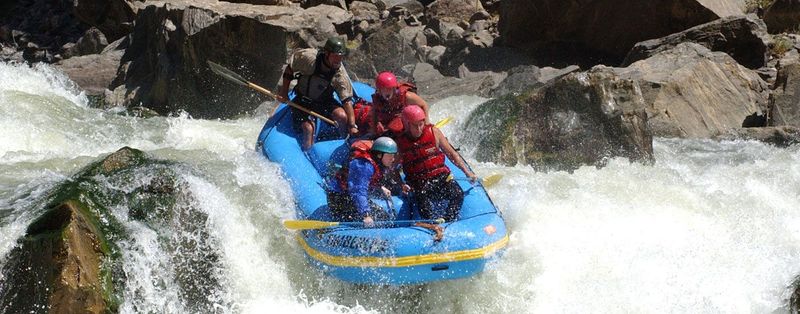
Immediately upstream from the Upper Colorado’s relaxed family water lies Gore Canyon. The contrast is difficult to overstate.
The river enters a remote gorge containing sustained Class IV and V rapids, powerful hydraulics and serious consequences. Rescue and recovery are considerably more difficult than on roadside sections.
Gore is widely regarded as one of the toughest commercially rafted river sections in the United States. It is spectacular for the narrowly qualified group and unsuitable for most Colorado vacationers.
Previous Class III rafting—or enthusiasm combined with general athleticism—is not sufficient preparation. Participation depends on water levels, fitness, swimming ability and the outfitter’s assessment.
Timberline Tours pioneered commercial Gore Canyon trips in the early 1990s and is our recommendation when the section is operating at appropriate flows.
Shoshone and Glenwood Canyon
Best for: Accessible Colorado River whitewater near Glenwood Springs
The Shoshone section compresses a lively sequence of Class II–III rapids into the Colorado River’s narrow Glenwood Canyon.
The surrounding interstate and railroad keep it from feeling like a wilderness expedition, but the walls are impressive from water level and the rapids provide plenty of action in a relatively short distance. Downstream, the river relaxes as it approaches Glenwood Springs.
Shoshone is a useful middle ground: more concentrated whitewater than the Upper Colorado family sections without the extreme demands of Gore Canyon.
We recommend Blazing Adventures. If scheduling happens to put Conrad in your boat, you will be paddling with the captain of the USA Men’s Rafting Team.
Ruby–Horsethief Canyon
Best for: Families, first-time river campers and anyone who wants a desert expedition without major whitewater
West of Grand Junction, the Colorado River leaves the broad Grand Valley and enters the red-rock walls of Ruby and Horsethief canyons.
The classic trip covers approximately 25 miles from Loma, Colorado, to Westwater, Utah. Most groups spend two or three days floating Class I–II water, camping on sandy beaches and exploring side canyons that are inaccessible from nearby highways.
Ruby–Horsethief is less about whitewater difficulty than about the complete river-camping experience. The gentle pace provides time for inflatable kayaks, swimming, short hikes and watching the canyon walls change color as the sun moves overhead.
One of the trip’s geological highlights is Black Rocks, where the Colorado cuts through exposed Precambrian stone far older than the surrounding sandstone. The contrast between dark basement rock, red canyon walls and wide beaches gives this stretch a character unlike Colorado’s alpine rafting rivers.
Ruby–Horsethief is one of the best introductions to multi-day rafting in the West. Guests can experience remote camps, guide-prepared meals and several days away from roads without committing to the bigger rapids of Westwater or Cataract Canyon.
We recommend Durango Rivertrippers, which offers a three-day Ruby–Horsethief trip and holds commercial access for this increasingly permit-limited canyon.
The Roaring Fork River
Best for: Aspen and Snowmass visitors seeking a seasonal mountain run
The Roaring Fork begins near Independence Pass and descends through the Aspen Valley before joining the Colorado River in Glenwood Springs.
Its character changes substantially with location and water level. Some stretches provide moderate family rafting, while higher spring flows create faster Class III–IV whitewater. Because it responds directly to mountain snowmelt, the Roaring Fork is generally a spring and early-summer rafting river rather than a dependable late-season option.
The valley scenery is the real distinction. You are rafting through one of Colorado’s most famous mountain regions, but seeing it from a river corridor rather than a ski lift or restaurant patio.
Our Aspen-area recommendation is Elk Mountain Expeditions. They also offer guided fishing and tours of the historic Smuggler Mine, providing a glimpse of Aspen before the boutiques, private jets and luxury real-estate listings.
The Gunnison Drainage: Taylor and Gunnison Rivers
The Taylor and Upper Gunnison Rivers
Best for: Crested Butte and Gunnison visitors who want mountain scenery and several levels of adventure
The Taylor River descends from Taylor Park Reservoir through a narrow mountain valley before joining the East River at Almont to form the Gunnison.
Sections of the Taylor feature cold, clear water and closely spaced boulder rapids. Other stretches are more approachable, offering mountain scenery and enough splash to engage families and first-time paddlers.
Below Almont, the Gunnison broadens and provides easier rafting, floating and fishing opportunities. The gentler sections are especially well suited to families, younger children and anyone who wants to spend more time looking at the valley than preparing for the next rapid.
The Taylor does not have the national name recognition of Browns Canyon or the Royal Gorge, which is part of its appeal. For visitors staying in Crested Butte or Gunnison, it delivers a real mountain river experience without spending half the day driving to another drainage.
We recommend Scenic River Tours, which has operated in the Gunnison Valley since 1977. Beyond rafting the Taylor and Gunnison, the company offers guided fishing, inflatable kayaking and guided rock climbing at Hartman Rocks.
Gunnison Gorge
Best for: A pack-supported wilderness expedition combining Class III–IV whitewater with exceptional trout fishing
Farther downstream, the Gunnison enters an isolated gorge below Black Canyon of the Gunnison National Park.
Guests hike approximately one mile to the put-in while rafts and expedition gear are packed into the canyon by horses. That rare logistical tradition makes the journey memorable before the boats are even launched.
Once on the water, the gorge combines technical Class III–IV whitewater, deep canyon scenery, remote camps and exceptional trout fishing. It is a true expedition rather than a casual float, with the isolation and commitment expected from a wilderness canyon.
For anglers, Arkansas River Tours’ three-day Gunnison Gorge fly-fishing trip combines the pack-supported canyon experience with several days on the Gunnison’s celebrated trout water.
The Lower Gunnison and North Fork of the Gunnison
Best for: Family river trips, spring whitewater and exploring Colorado’s North Fork Valley beyond the better-known rafting corridors
Downstream from the wilderness section of the Gunnison Gorge, the river broadens into an easier Class I–II corridor surrounded by colorful desert canyon walls. The Lower Gunnison Gorge provides a relaxed family river experience with wildlife viewing, swimming and enough gentle whitewater to keep the float engaging. Guests can explore the river in a guided raft or choose a more active trip by stand-up paddleboard or inflatable kayak.
The North Fork of the Gunnison offers a different side of the drainage. Flowing through the orchards, farms and small towns of the North Fork Valley, the river enters a secluded gorge filled with waterfalls, dripping springs, nesting herons, eagles and lively Class II–III rapids. The 10-mile North Fork Gorge trip is an approachable half-day adventure, while the full-day option combines the Upper North Fork and North Fork Gorge for approximately 20 miles of spring whitewater.
Our friends at Western Slope SUP are based in Hotchkiss and specialize in showing guests this quieter corner of the Gunnison drainage. Their location in the heart of Colorado’s North Fork wine and orchard country also makes these trips easy to combine with local wineries, farm stands and the small towns of Hotchkiss and Paonia.
The San Luis Valley: Upper Rio Grande
The Rio Grande Near South Fork and Creede
Best for: Uncrowded family rafting, mountain scenery and a more relaxed Colorado river experience
Before the Rio Grande becomes an international river, it begins in Colorado’s San Juan Mountains and flows through the broad, high-elevation landscape around Creede and South Fork.
The upper river offers scenic Class II–III rafting through sections such as Wagon Wheel Gap and the pool-drop rapids near Creede. Calm stretches leave time to watch for wildlife and take in the surrounding volcanic cliffs, while occasional rapids keep the trip active.
This is not a high-volume rafting corridor. The Rio Grande is a strong choice for families, first-time rafters and travelers who value open scenery and a quieter river more than nonstop technical whitewater.
Mountain Man Rafting was established in Creede in 1985 and is now part of Narrow Ridge Outdoors in South Fork. It remains the only commercial outfitter authorized to guide the beautiful sections near Wagon Wheel Gap and Creede.
Northwest Colorado and the Canyon Country Beyond
The Yampa, Green and Desert Colorado Rivers
Best for: Multi-day wilderness travel, remote canyon camps and people who want more than a day trip
Not every great rafting experience fits between breakfast and dinner.
The Yampa begins in Colorado and flows through Dinosaur National Monument before joining the Green River at Echo Park. It is the last major free-flowing tributary in the Colorado River system, rising and falling with natural snowmelt rather than releases from a large upstream dam.
A Yampa trip combines warm-water rapids, immense sandstone walls, side-canyon hikes, archaeological sites and several nights beyond the reach of pavement. The river is important not because it contains Colorado’s hardest whitewater, but because it still behaves like a river.
Nearby, Green River expeditions pass through the Gates of Lodore and Desolation Canyon. Farther downstream, the Colorado enters Westwater Canyon in Utah, just beyond the Colorado border.
Westwater is a classic desert day trip or overnight with Class III–IV whitewater, steep black-rock walls and a much more concentrated rapid sequence than Ruby–Horsethief immediately upstream.
These are not merely longer versions of a half-day raft trip. Camps, meals, geology, stars and days spent moving at river speed become as memorable as the rapids.
Our recommendation is Holiday River Expeditions, founded by Dee and Sue Holladay in 1966. Holiday helped establish the tradition of quiet, human-powered Western river travel, using oars instead of motors and treating the canyon—not simply its rapids—as the reason for being there.
Holiday runs trips on the Yampa, Green and Colorado rivers, including the Yampa through Dinosaur National Monument, Gates of Lodore, Desolation Canyon and Westwater Canyon.
Bonus: The Rio Chama in Northern New Mexico
Best for: A desert-canyon overnight trip within easy reach of southern Colorado
The Rio Chama is technically a New Mexico river, but its wilderness section is closer to Colorado than to many departure points in its home state.
Below El Vado Reservoir, the river travels through a remote canyon of ponderosa forest, open meadows and layered sandstone. Most of the whitewater is Class II–III, so the Rio Chama is less about surviving major rapids and more about spending several days in a remarkable landscape.
It is a particularly good first multi-day trip. Guests get riverside camping and genuine isolation without the difficulty of Gore Canyon or the longer commitment required by many desert expeditions.
We recommend Durango Rivertrippers for travelers approaching from Southwest Colorado.
Rivers do not pay much attention to state tourism boundaries, and neither should a good road trip.
When Is Colorado’s Rafting Season?
Most Colorado whitewater is powered by mountain snowmelt. The broad season runs from May into August, but the useful answer depends on the river.
May and June generally bring colder, faster water on free-flowing mountain rivers. Mid-summer often provides warmer weather and more moderate conditions. Dam-controlled sections such as portions of the Blue, Upper Colorado, Taylor, Green and Rio Chama may remain available after smaller snowmelt rivers have dropped.
Some rivers have especially narrow windows. The Eagle depends on spring runoff, the Piedra requires a combination of adequate flows and restricted commercial access, and the Dolores may go several years without releases sufficient for commercial rafting.
Rather than choosing a date from a generic statewide calendar, choose the kind of river you want and ask a local outfitter how that section normally behaves during your visit.
A Quick Note About Rapid Ratings
River classifications are helpful shorthand, but they do not tell the entire story:
- Class II: Straightforward waves and broad maneuvering room.
- Class III: Larger waves, stronger currents and active teamwork.
- Class IV: Powerful, technical rapids requiring precise maneuvers.
- Class V: Extreme and consequential whitewater for a narrowly qualified group.
Cold water, isolation, continuous rapids and limited recovery areas can make one Class III or IV section more committing than another with the same rating. Water level matters too: the same rapid can look and feel dramatically different several weeks apart.
Current local knowledge is more useful than a class number copied from an old guidebook.
What Is the Best Whitewater Rafting in Colorado?
There is no single best rafting river in Colorado. The right answer depends on your group, experience, location, season and the kind of river day—or multi-day expedition—you want.
Best Family, Scenic and First-Time Rafting Trips
- Best early-season, uncrowded rafting experience: San Juan River in Pagosa Springs
- Best introductory town whitewater: Splash & Dash on the San Juan River in downtown Pagosa Springs
- Best scenic half-day river journey: Mesa Canyon on the San Juan River below Pagosa Springs
- Best family rafting through a historic mountain town: Lower Animas River in Durango
- Best classic Colorado Class III rafting: Browns Canyon on the Arkansas River
- Best gentle Arkansas River scenic float: Cottonwood Canyon near Cotopaxi
- Best Colorado rafting option for very young children: Family Float on the Arkansas River
- Best family rafting near Cañon City: Bighorn Sheep Canyon
- Best short rafting trip near Breckenridge: Blue River Half-Day
- Best early-season rafting near Vail: Lower Eagle River
- Best relaxed multigenerational float: Upper Colorado River
- Best accessible Colorado River whitewater: Shoshone and Glenwood Canyon
- Best Aspen-area rafting: Upper Roaring Fork
- Best rafting near Crested Butte: Taylor River
- Best uncrowded family rafting in the San Luis Valley: Upper Rio Grande near South Fork and Creede
- Best family rafting near Black Canyon of the Gunnison: Lower Gunnison Gorge
-
- Best exclusive technical boulder run: West Fork of the San Juan
- Best dramatic canyon setting: Royal Gorge
- Best technical whitewater near Denver: Clear Creek Advanced Express
- Best Wild and Scenic rafting near the Front Range: Cache la Poudre River
- Best advanced Arkansas River day: The Gauntlet: Pine Creek and the Numbers
- Best extreme commercial whitewater: Gore Canyon
- Best Class V wilderness trip supported by a historic narrow-gauge railroad: Upper Animas River
- Best continuous Class II–III rafting near Telluride: San Miguel River
- Best remote whitewater in northern Colorado: Northgate Canyon on the North Platte River
- Best Rare, Wilderness and Multi-Day River Trips
- Rarest guided Colorado whitewater opportunity: Piedra River when runoff, access and conditions align
- Best rare red-rock expedition in Southwest Colorado: Dolores River when reservoir releases provide runnable flows
- Best pack-supported wilderness rafting and fishing expedition: Gunnison Gorge
- Best free-flowing multi-day expedition: Yampa River through Dinosaur National Monument
- Best first desert-canyon overnight near Colorado: Rio Chama
- Best introduction to a multi-day desert river trip: Ruby–Horsethief Canyon
- Best concentrated desert whitewater near the Colorado border: Westwater Canyon
The best rafting trip is not automatically the river with the biggest rapid or the most famous name. It is the section that fits your group, your season and the kind of experience you actually want to remember.
If that experience includes uncrowded water, personal attention and the San Juan Mountains rising above the river, explore our Pagosa Springs rafting trips.